Showing posts with label Detroit Institute of Arts. Show all posts

Wednesday, May 20, 2015

French Smallsword (1780 A.D.)

While at first glance it may look like a delicate weapon, it is in fact quite deadly.

Gilded hilt.

The blade, while lacking a cutting edge, is fluted in what appears to be something of a star-shape, making the sword very rigid and strong.  The purpose of this weapon was to skewer and kill your opponent.

The star-shaped cross section of the blade would leave a horrible wound that have great difficulty healing.  Any thrust to the torso would be a serious and potentially fatal wound, even if it did not instantly strike a vital organ.
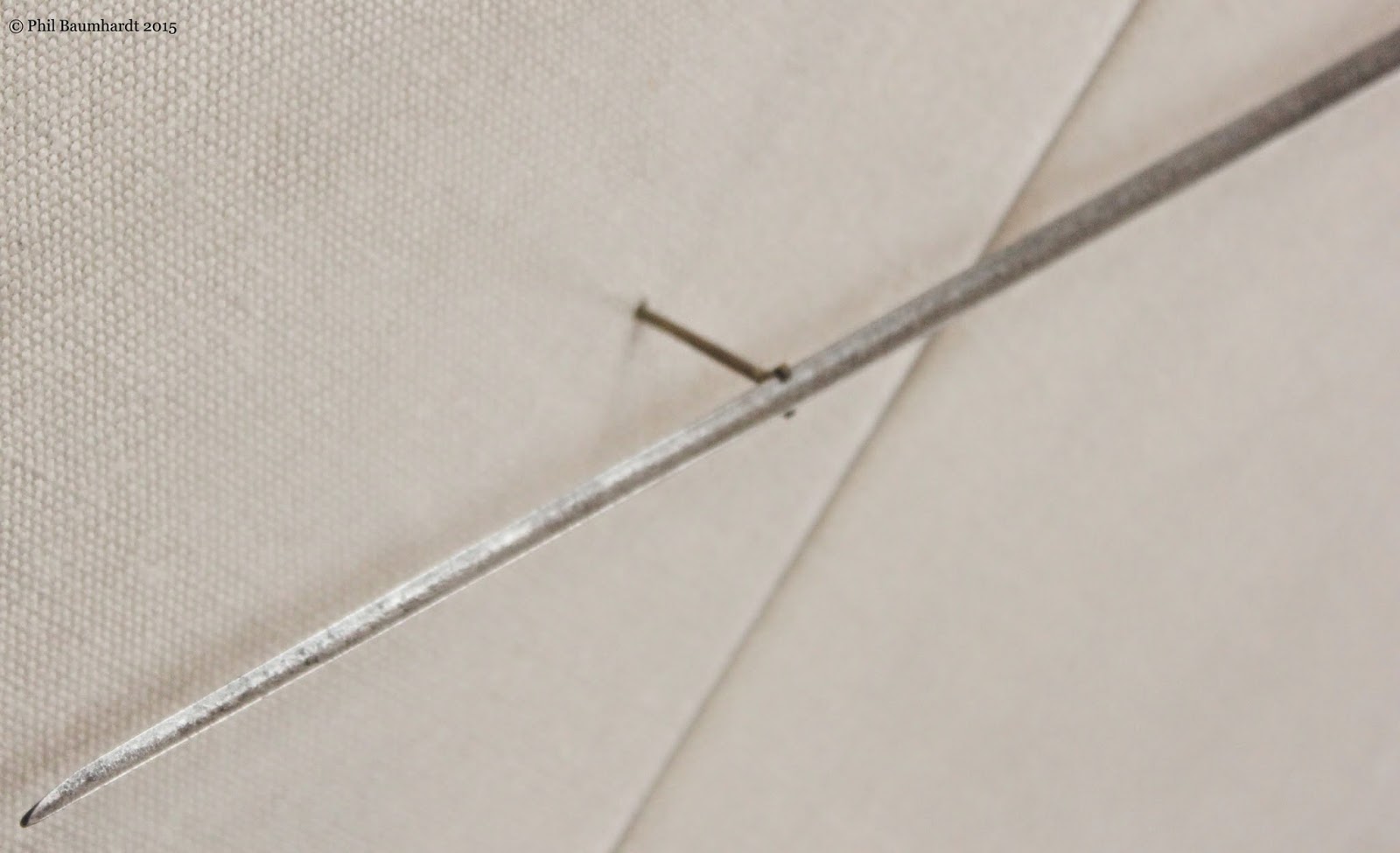
The tip of the sword is very strong due to the fluting, and it would puncture heave, layered clothing. It is reminiscent of the chisel-tipped bayonets of the Russian Mosin-Nagant rifles of World-War II.  

The sword is on display at the DIA.

Saturday, May 9, 2015

German Hunting Swords from the 18th century

Gilt bronze hilt and ivory grip.


The "hunting sword" was an evolution of the "hanger" sword that dates to about 1700.  The blades are shorter and slightly more curved, and the name derives from the motifs that decorate it (such as the bird or hawk on this example).  The hunting sword was popularized in Britain by Admiral John Benbow.

Monday, April 13, 2015

German "Calendar" Sword, 1576 A.D. Century


The guard is a modern reconstruction.

The ricasso and forte. Maker's mark is on the left.


The blade is the one on the top. The deep fuller and wide cutting edges is reminiscent of Viking Age swords.


Sunday, April 12, 2015

Italian Cinqueda (1480 AD)


A broad-blade single handed short sword that is the descendent of Migration and Viking era swords, it was used between the late 15th and mid-16th centuries.  Note the two fullers.

The grip is made from bone.

Close up of the cinqueda tip.


Saturday, March 28, 2015

Reitschwert (Sword) from Saxony


Sword used by heavy cavalry, reiters, and harquebusiers between the 16th and 17th century in the Holy Roman Empire and Northern Europe.

German sword, dating from 1580 A.D.
The reitschwert is a hybrid between a bastard sword and a rapier.

Leather scabbard.

Possibly silver fittings on grip and guard.

Blade stamp in fuller.

Possibly maker's mark at the end of the fuller.

On display at the Detroit Institute of Arts.

Wednesday, March 25, 2015

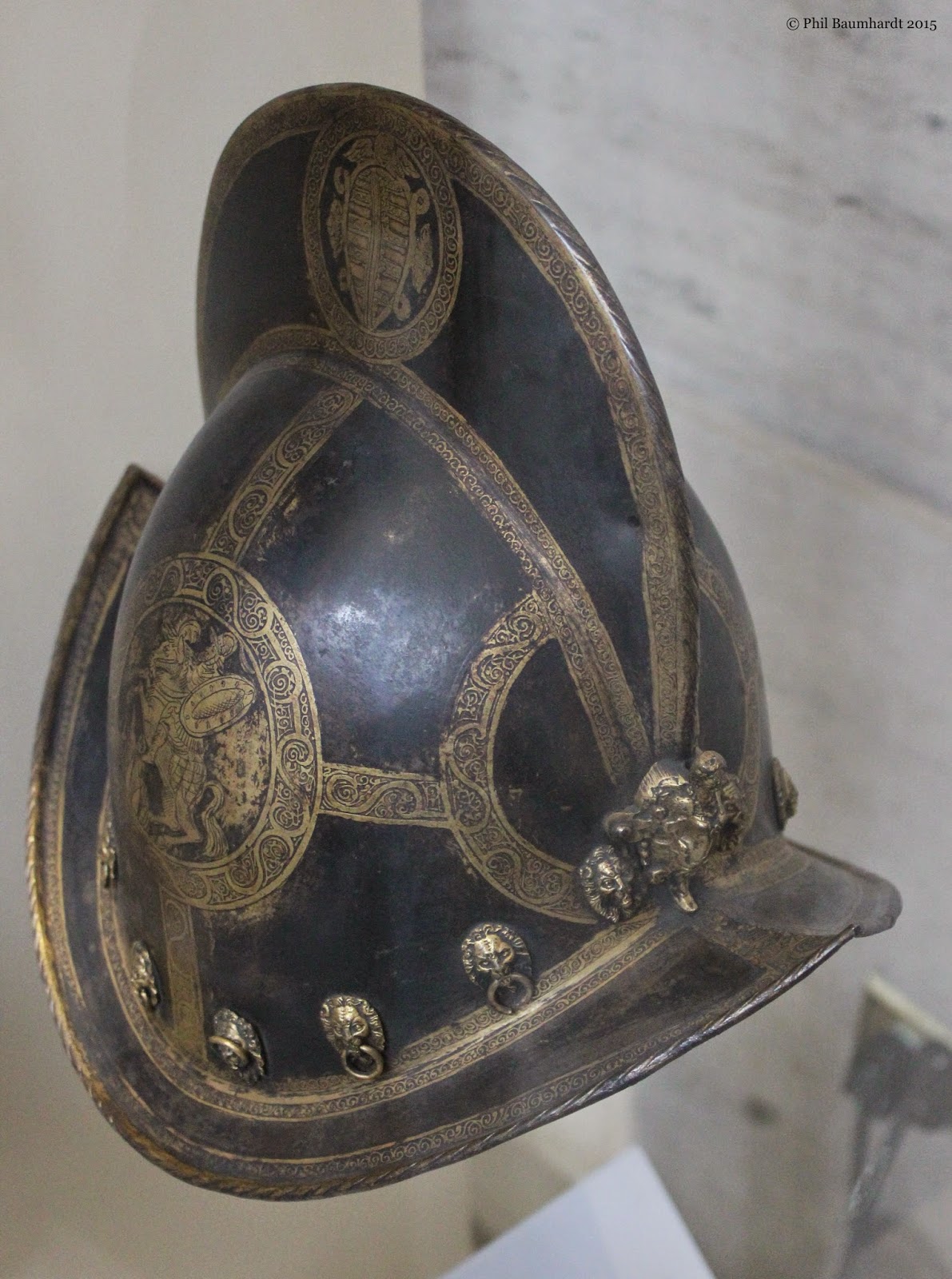
German Morion (helmet) from Saxony (1580/90)

The steel has been blackened, etched and gilded. Beautifully detailed it is obvious that it was never intended to see combat, this was worn by the personal guard of the Prince Electors of Saxony (the Trabantenleibgarde). Black and gold were the livery colors of the electors.

On display at the Detroit Institute of Arts.

Tuesday, March 24, 2015

Italian Barbut (helmet) from 1450/60

While crude looking at first glance, it is still a feat of blacksmithing to think it was forged from a single piece of steel, much like the ancient Greek helm of bronze. This helmet, however, must have been more challenging to make.  The imperfections make it all the more interesting, proof that it was made by a craftsman rather than a machine. 

I imagine that this was a soldier's helmet,  though perhaps it never saw battle. The central ridge and shape of the dome would have assisted in sword/ax blows glancing off the steel and sliding off.


On display at the DIA. 

Monday, March 23, 2015

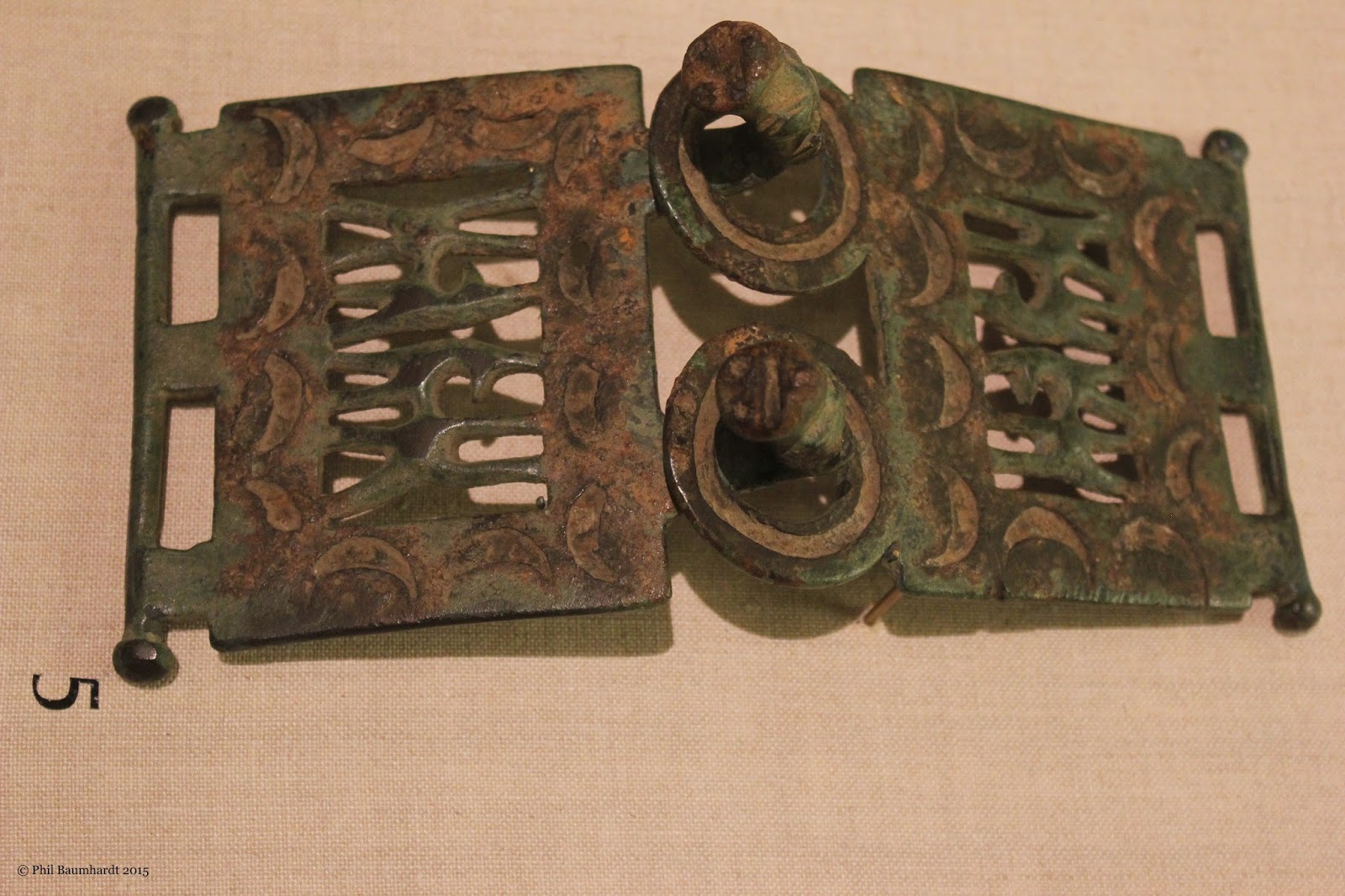
Roman Belt Buckles

Bronze belt buckle from between 700-650 B.C.E.

600s to early 500s B.C.E.

At the Detroit Institute of Arts.

Saturday, March 21, 2015

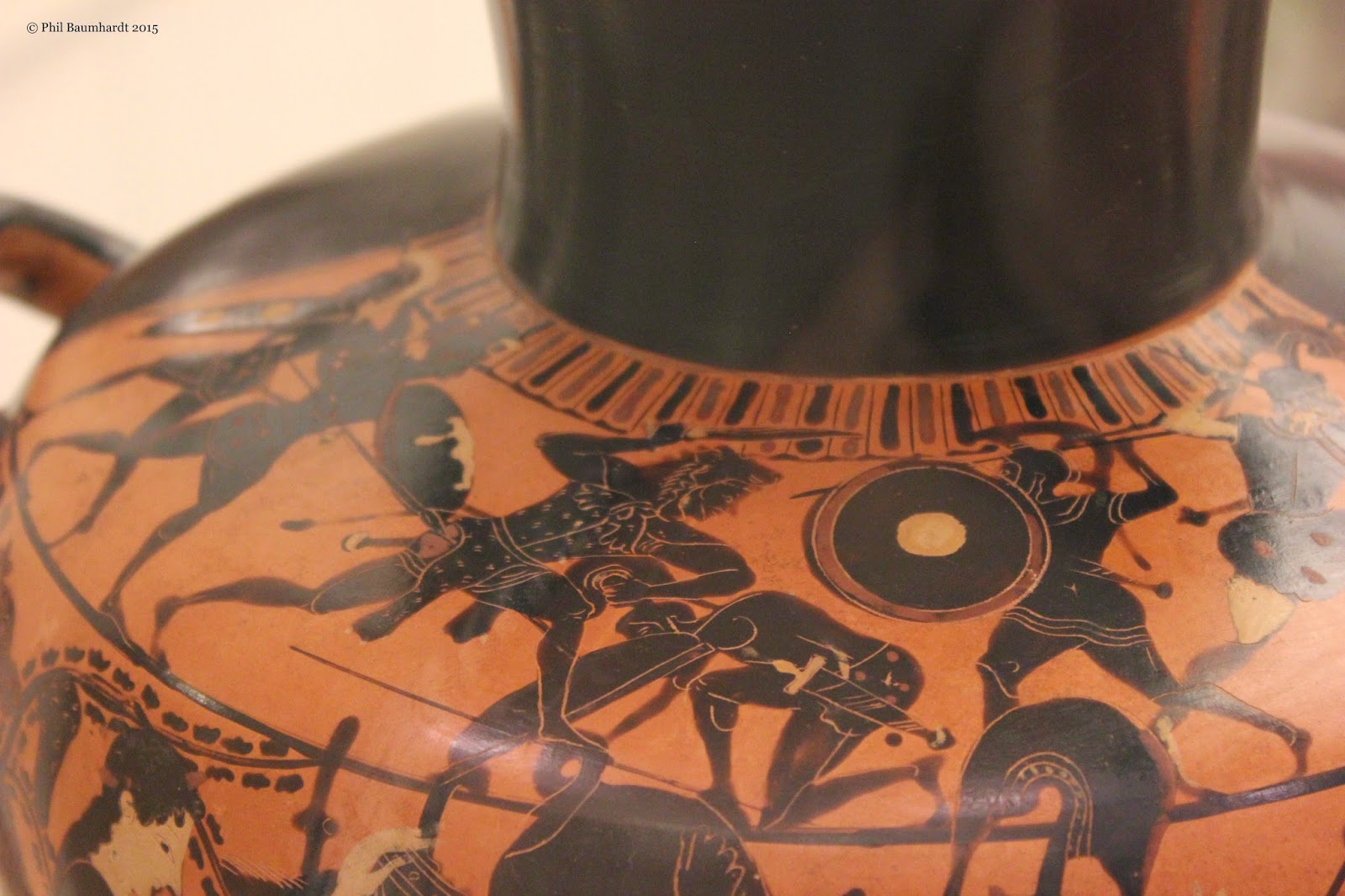
Fighting Technique Depicted on Ancient Greek Amphora

An amphora was a storage jar, dating to around 520-510 B.C.E.
The warrior wearing the leopard/lion skin appears to to exhibiting some close quarters combat skill. He has stepped on his enemy's spear to neutralize it and has gripped the helmet by the crest.  He is also using his elbow to help hold his foe down as he stabs him the back with his sword. Interesting to not the sword is held in a reverse or icepick grip.

Wednesday, March 18, 2015

Roman Votive Altar to Saturn

In Latin it reads, "To Jupiter Sabazius: Quintus Nunninus Alexander has willingly and rightfully fulfilled his vow".

The Romans would make vows to their deity of choice and offer them a sacrifice. Originally it seems that they had a ritual involving the killing of an animal such as a cow or ram and the intestines of that animal would be removed and burned upon an altar.

It doesn't look like this altar was used for this purpose, but rather the carving of the altar itself was the offering made by the man mentioned on the inscription.  The votive ritual appears to almost be a contract between men and the gods, in which the mortal vows to do a thing if the deity does something for him. Here's an in-depth look at the Roman votive ritual: http://www.teachtext.net/bn/ancienthistory/religion_text/Derks.pdf


Display plaque at the Detroit Institute of Arts.

Sunday, March 15, 2015

Roman Statue of Armor

It appears to have gryphons depicted on it.

Remember to beware the ides of March!

Saturday, March 14, 2015

Friday, March 13, 2015

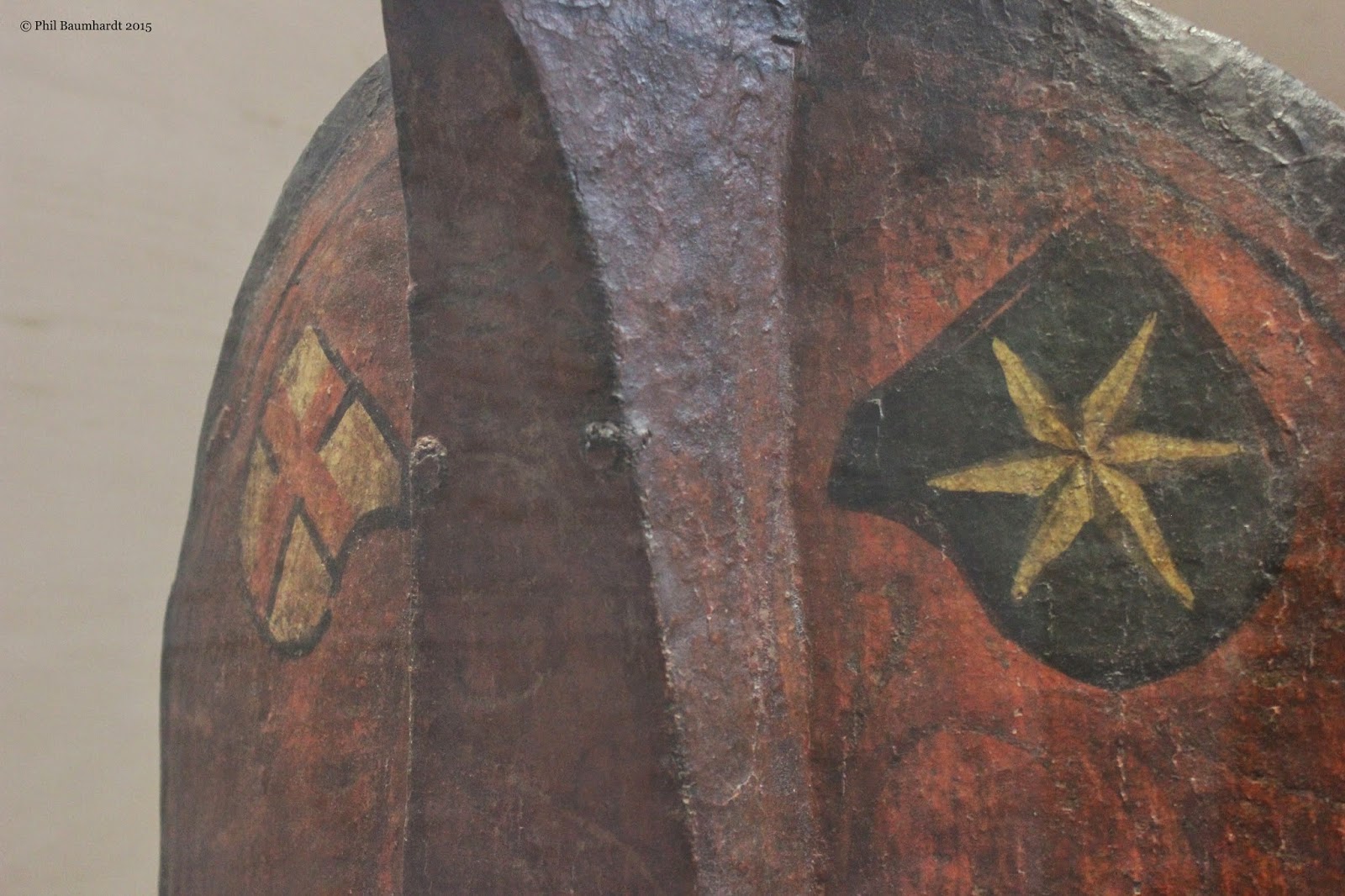
Beechwood Pavise (Shield, 1400 A.D.)

The pavise is a large shield used by archers and crossbowmen, notably during sieges because it provides protection for the entire body. It would have been mounted on a stand of some kind to allow the bowman use of both hands.

The bottom half of the shield.

 A closer look at the scrollwork design.  It flies in the face of the popular notion of medieval times being drab and sepia in color.

I am impressed by the shading detail of the coat-of-arms.

On display at the Detroit Institute of Arts, the piece is from the 1400's. Possibly from Austria.


Thursday, March 12, 2015

German Wheellock (Firearm)

The DIA has a small collection of beautifully decorated wheel-locks from about 1610.

Impressive inlays with an eagle or gryphon motif that I feel rival that of any other cultures of the time. The large silver eagle's head would hold the piece of flint which would strike the piece.

Plaque at the Detroit Institute of Arts. 


Wednesday, March 11, 2015

Italian Main Gauche Dagger with Blade-catch (17th century)

Blade-catching holes run the entire blade-length until it starts to taper toward the point.


The true edge is sharp, even if the back is not.

Interesting wire-wrap on the hilt.

Square holes with elongated corners, which I feel were created for catching enemy sword blades.  Even  an inch or two of the point in the hole would allow the wielder of the dagger to control his opponent's weapon.

The twisted shape of the quillion creates grooves that opponent's blades can fall into, which assists in binding maneuvers.  

The tip.

Face in the scrollwork of the knuckle guard.


Interesting blade stamp/makers mark.

Another shot of the point and blade-catchers.

This dagger can be seen at the Detroit Institute of Arts. Dated to 166, from Naples.